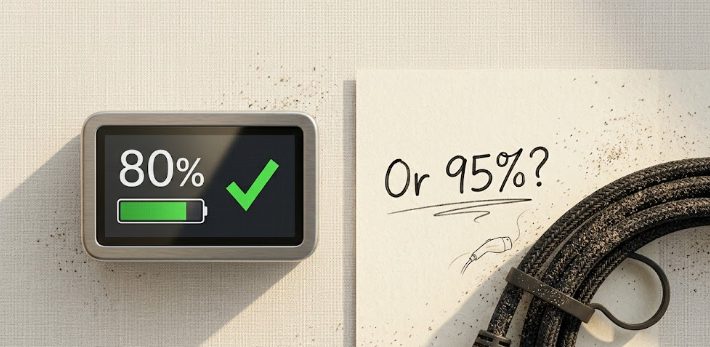
The 80% Rule: Useful Habit or Overstated Internet Ritual?
Hey, it’s Logan Pierce. We’ve talked range buffers, summer heat impacts, and charging app frustrations. Today in the Range category, let’s address one of the most repeated pieces of EV wisdom: the 80% rule.
You’ve heard it everywhere — “Never charge above 80% for daily use to protect battery health.” Some EV owners treat it like gospel. Others ignore it completely. As someone who works in charging network operations in Phoenix, I see the real data on how batteries actually behave. So let’s cut through the noise.
A good car decision should still feel good on a Tuesday. If obsessively stopping at 80% adds stress without real benefit, then it’s not worth it.
Where the 80% Rule Comes From
The advice isn’t completely made up. Lithium-ion batteries do experience slightly more degradation when held at 100% for long periods, especially in high heat. Manufacturers often recommend daily charging to 80-90% for longevity.
But here’s the important part: modern EV batteries have sophisticated thermal management and charging software. The difference between charging to 80% versus 90-100% for daily use is much smaller than most internet forums claim.
From the operations side, I see fleet vehicles charged to 100% regularly with excellent long-term battery health.
When the 80% Rule Is Actually Useful
The rule makes good sense in these situations:
Hot Climate Storage: In Phoenix summers, if the car will sit for days at 100%, keeping it at 80% reduces stress on the battery.
Long-Term Parking: Going on vacation? Set it to 80% before leaving.
New Owners Building Habits: In your first year, it helps you learn your real consumption patterns without pushing limits.
Maximizing Longevity Obsession: If you plan to keep the car 10+ years and want every possible mile of battery life.
In these cases, it’s a smart, low-effort habit.
When It Becomes an Overstated Ritual
Here’s where it often goes too far:
Daily commuting where you need the full range the next day.
When it forces you to charge more frequently or use public stations unnecessarily.
When it creates mental load — constantly watching the percentage instead of just living.
I’ve talked to owners who stress about hitting exactly 80% every night, even when they have reliable home charging and short commutes. That’s not ownership freedom. That’s unnecessary ritual.
In real Phoenix conditions, the difference in battery degradation between 80% daily and 90-100% is marginal for most people over 5-7 years.
My Personal Approach at Home
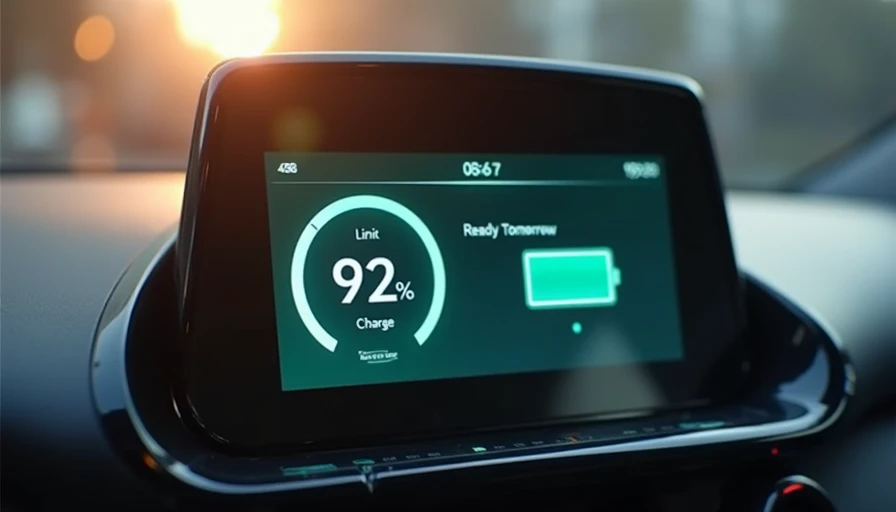
In our townhouse with Level 2 charging, I usually set the car to charge to 90-95% for normal weekdays. In extreme summer heat, I might drop it to 85%. On weekends or before longer drives, I let it go to 100%.
This feels relaxed. I don’t obsess. The car is ready when I need it, and I’m not micromanaging percentages every evening.
My girlfriend and I ran the ownership math — the small potential longevity benefit wasn’t worth the daily friction for our routine.
What the Operations Data Actually Shows
From the network and fleet side:
Vehicles charged daily to 100% don’t show significantly faster degradation in the first 5 years when thermal management is good.
Extreme heat has a much bigger impact on battery health than occasional 100% charges.
The biggest longevity killers are frequent fast charging in heat and consistently low state of charge (under 20%).
The 80% rule is a guideline, not a law.
Practical Framework for Your Own Rule
Here’s how to decide what’s right for you:
Check Your Car’s Manual — Many newer models are fine with regular 100% charging.
Factor Your Climate — Hot areas like Phoenix justify more caution.
Match Your Routine — Short predictable commute? 90-100% is usually fine. Longer or variable days? Build in buffer.
Monitor Battery Health — Most EVs show degradation data. Check it every 6 months.
Prioritize Convenience — If following 80% strictly adds hassle, relax it.
The goal is relaxed confidence, not perfection.
Bottom Line: Guideline, Not Gospel
The 80% rule is useful in specific situations, but for most normal drivers with home charging, it’s often overstated internet ritual. Modern batteries are smarter than the old advice gives them credit for.
Focus more on reliable home charging, realistic range buffers, and avoiding extreme habits (constant fast charging in heat or letting the battery sit near 0%). Those matter far more for long-term health.
In the Range category, we’ll keep cutting through these common myths with practical realities. Next time we’ll wrap up the first 20 with a Verdict piece on the monthly payment trap.
Until then, experiment with what feels right for your life. Don’t let percentage anxiety steal the joy of EV ownership. Charge to a level that keeps your Tuesdays easy and stress-free.
Because a good car decision should still feel good on a Tuesday — without needing to babysit the battery every night.


No notes on this sheet yet.