The Monthly Payment Trap in EV Shopping No One Talks About
Hey, it’s Logan Pierce. As we wrap up this first batch of posts, I want to end with one of the most important Verdict pieces: the monthly payment trap in EV shopping.
I work in charging network operations in Phoenix. I’ve seen too many people excited about a “low” monthly payment only to feel squeezed six months later when the full picture hits. This isn’t about scaring you away from EVs. It’s about making sure you don’t buy one that feels good on signing day but heavy on a random Tuesday.
A good car decision should still feel good on a Tuesday. That includes opening your bank app and not wincing at the payment.
Why Monthly Payments Feel So Seductive
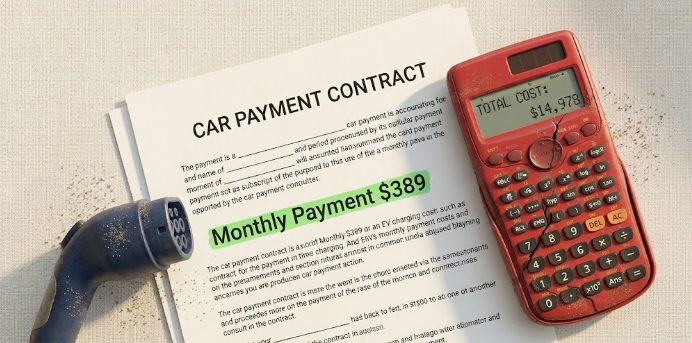
Dealerships love to sell on monthly payment. “Only $389 a month!” sounds manageable. You focus on that number instead of the total cost, incentives, insurance differences, charging setup, and real operating expenses.
This trap is especially dangerous with EVs because of higher average transaction prices and the way tax incentives can be folded into the deal.
The Hidden Costs Most People Miss
Here’s what the “low monthly payment” often hides:
1. Higher Insurance
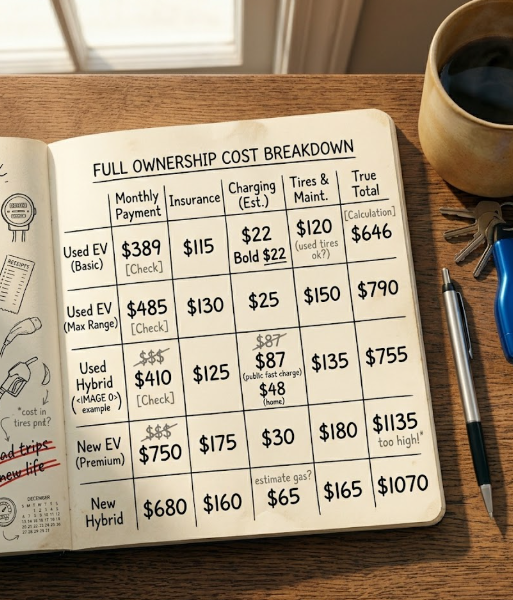
EVs still cost more to insure in most states. That $389 payment can quietly become $460 when insurance is factored in.
2. Charger Installation
If you don’t already have Level 2 at home, add $1,000–$2,500. Many people finance this separately or put it on a credit card, killing the “low payment” illusion.
3. Higher Registration & Taxes
Some states have EV-specific fees that offset gas tax savings.
4. Faster Tire Wear
Instant torque means tires wear quicker. Budget an extra $200–$400 every 25-30k miles.
5. Opportunity Cost
That money going to a bigger battery or fancy trim could have gone to a more practical hybrid with lower overall stress.
I run ownership spreadsheets for almost every big purchase. When my girlfriend and I looked at options, the EV with the sexy low payment actually had the worst total 4-year cost once everything was included.
Real Phoenix Example
A friend recently bought a popular EV. The salesman got him to $399/month. Sounds great, right?
After adding insurance difference (+$68/month), estimated charging setup, and higher tire costs, his real monthly ownership number was closer to $520. Six months later he admitted the payment felt tighter than expected, especially with summer electricity bills.
He bought for the payment, not the total reality.
How to Avoid the Trap
Always Calculate Total Cost of Ownership Look at 4–5 years, not just the payment. Include insurance, maintenance, tires, charging costs, and resale value.
Run the Tuesday Test Will this payment still feel comfortable on a normal Tuesday when life isn’t perfect?
Compare Apples to Apples Run the same math on a comparable hybrid or gas car. The difference might be smaller than you think.
Don’t Stretch for Incentives Tax credits are nice, but don’t buy more car than you need just to “maximize” them.
Consider Slightly Higher Payment for Simplicity Sometimes paying a bit more for a better-fit hybrid or smaller EV saves money and stress long-term.
My Personal Philosophy
My girlfriend and I always ask: “Does this payment still feel good when we’re both tired, the AC is running, and life is normal?”
We’ve walked away from deals that looked good on monthly numbers but failed the Tuesday test. That discipline has saved us regret multiple times.
Bottom Line: Payment Is Just One Number
Don’t let a shiny monthly payment blind you to the full picture. The best EV (or hybrid) decisions are the ones that fit comfortably into your real life without creating financial tension.
The trap isn’t buying an EV. The trap is buying the wrong EV — or any car — based on monthly payment instead of total ownership reality.
This wraps up our first 20 posts. We’ve covered commute realities, charging truths, range honesty, and practical verdicts. The goal was never to push EVs on everyone. It was to give normal drivers the clear-eyed information needed to make decisions that actually work for their lives.
Thank you for reading. I’ll keep sharing practical, no-hype advice from the infrastructure side. If you’re still shopping, run your own numbers. Be honest about your routine. And remember — a good car decision should still feel good on a Tuesday.




No notes on this sheet yet.