The Problem With Buying an EV to Impress Your Future Self
Hey, it’s Logan Pierce. We’ve covered a lot of practical ground in the last few weeks — commutes, charging, range, couples sharing cars. Today in the Verdict category, I want to talk about one of the most common (and expensive) mistakes I see people make when buying an EV.
They’re not really buying it for their current life. They’re buying it for some imagined future version of themselves.
“I’ll take more road trips someday.”
“I’ll move to a place with better charging.”
“I’ll become the eco-conscious person I want to be.”
I work in charging network operations in Phoenix. I see the aftermath of these decisions when people end up frustrated six months later. The data doesn’t lie, and neither does real Tuesday-night ownership.
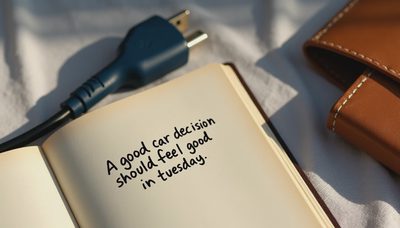
A good car decision should still feel good on a Tuesday — not just in the version of your life you hope to have in two years.
Why Future-Self Purchases Go Wrong

Buying for your future self sounds responsible. In reality, it often means ignoring your current routines, parking situation, and actual needs.
You picture yourself as that person who effortlessly road-trips every month. But right now, you’re doing 22 miles a day in Phoenix heat with apartment parking. The car you buy to match the fantasy becomes a daily reminder that your real life doesn’t match the vision yet.
I’ve seen this pattern repeatedly: People stretch their budget for a bigger battery or faster charging “for the future,” only to feel the payment pressure on normal weekdays when life is still… normal.
The Real Cost of Impressing Your Future Self
Let’s run some honest math:
You buy a long-range model because “someday I’ll do more trips.”
You pay $8,000–$12,000 more upfront.
Your monthly payment jumps.
You still use it mostly for commuting and errands.
The fancy features you paid for sit unused.
Meanwhile, a more practical trim would have fit your actual life better and left you with less financial stress.
From the operations side, I see higher complaint volumes from people who clearly bought more car than their current lifestyle needed. The gap between expectation and reality creates disappointment.
My Own “Future Self” Lesson
A few years ago, before my current role, I almost bought a bigger EV than we needed. My girlfriend and I sat down one evening and asked: Are we buying this for who we are right now, or who we think we’ll become?
We chose the more practical option. No regrets. Our actual routines — morning coffee runs before the heat, weekday commutes, occasional desert trips — didn’t need the bigger battery. The money we saved went into home improvements that actually improved our daily life.
That decision still feels good on Tuesdays.
What Ownership Friction Really Looks Like
When you buy for future you, the present-day friction hits harder:
The extra monthly payment feels heavier when you’re tired.
The bigger battery still needs charging, and you’re not using the extra range.
You feel a quiet sense of “I paid for more than I use” every time you plug in.
Ownership friction matters more than launch-day excitement.
I’m not saying don’t plan ahead. But the best decisions are anchored in your current reality, with some reasonable headroom — not a complete fantasy life.
How to Know If You’re Buying for Future You
Ask yourself these questions honestly:
Am I buying more range/battery/tech than my current weekly driving actually needs?
Would this decision still make sense if my life stayed exactly the same for the next 3 years?
Am I stretching the budget because of how I want to see myself?
Would my current Tuesday routine feel better or more stressed with this car?
If the answers lean toward future fantasy, pause.
The Smarter Alternative: Buy for Present You
Focus on who you are and what you actually do right now:
Match the car to your real commute and parking.
Prioritize home charging readiness over maximum range.
Choose the trim that fits your current budget comfortably.
Leave some room for growth, but don’t bet everything on it.
The happiest EV owners I see are the ones who bought a tool that fits their life today, not a statement piece for tomorrow.
Bottom Line: Present Reality Beats Future Fantasy
It’s tempting to buy the car you think your future self deserves. But cars are tools for your current life. The best ones make today easier, not more complicated while you wait for some idealized future.
Don’t impress your future self at the expense of your present self. Buy the car that makes sense on a random Tuesday when you’re just trying to get home after a normal day.
That’s the standard I use, and the one I’ll keep applying in every Verdict piece.
In future posts, we’ll keep cutting through the hype and focusing on real ownership logic. Next time we’ll talk about fast charging and why it shouldn’t be your main plan.
Until then, be honest with yourself about why you’re considering an EV. Run the boring math for your actual life right now. Make the choice that still feels good when life is normal.
Because a good car decision should still feel good on a Tuesday — not just in your imagination.

No notes on this sheet yet.